
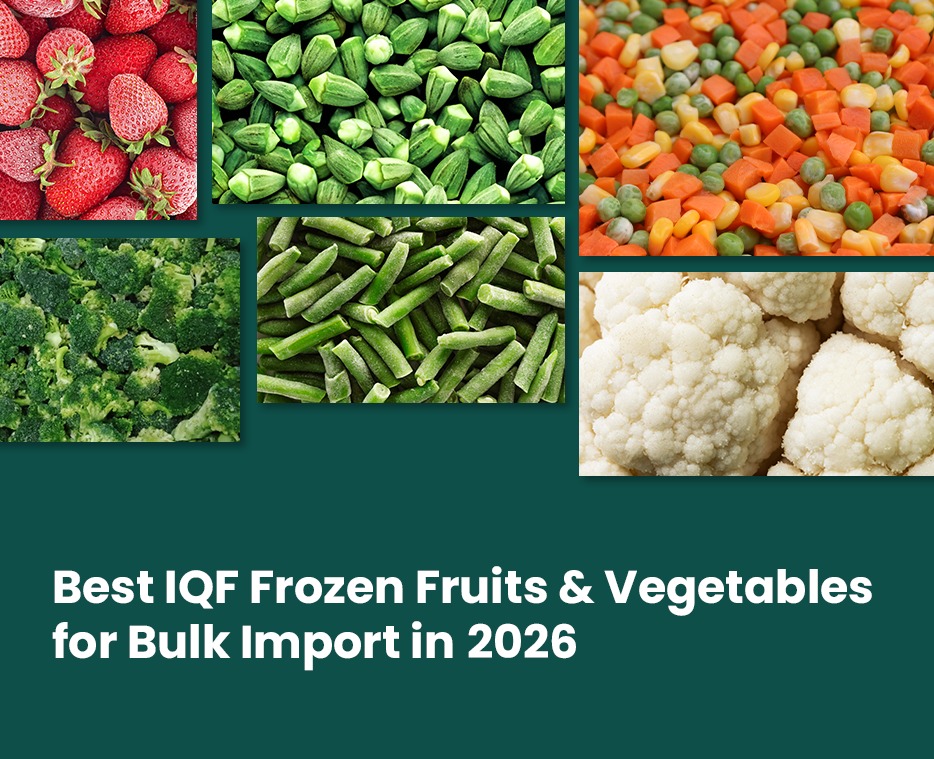
If you’re a distributor, food manufacturer, or private label buyer sourcing frozen produce at scale, not all IQF (Individually Quick Frozen) products are created equal, and not all of them are equally available, equally consistent, or equally suited to bulk import programs.
This guide breaks down the 10 best IQF frozen fruits and vegetables for bulk import in 2026, based on global demand, supply reliability, format flexibility, and sourcing considerations. Whether you’re building a private label range, supplying foodservice, or stocking retail shelves, this list is designed to help you plan your sourcing calendar with confidence.
Each entry includes what to look for when sourcing, typical formats available, and key considerations for distributors and manufacturers.
1. IQF Frozen Strawberries
Variety: Festival, Fortuna
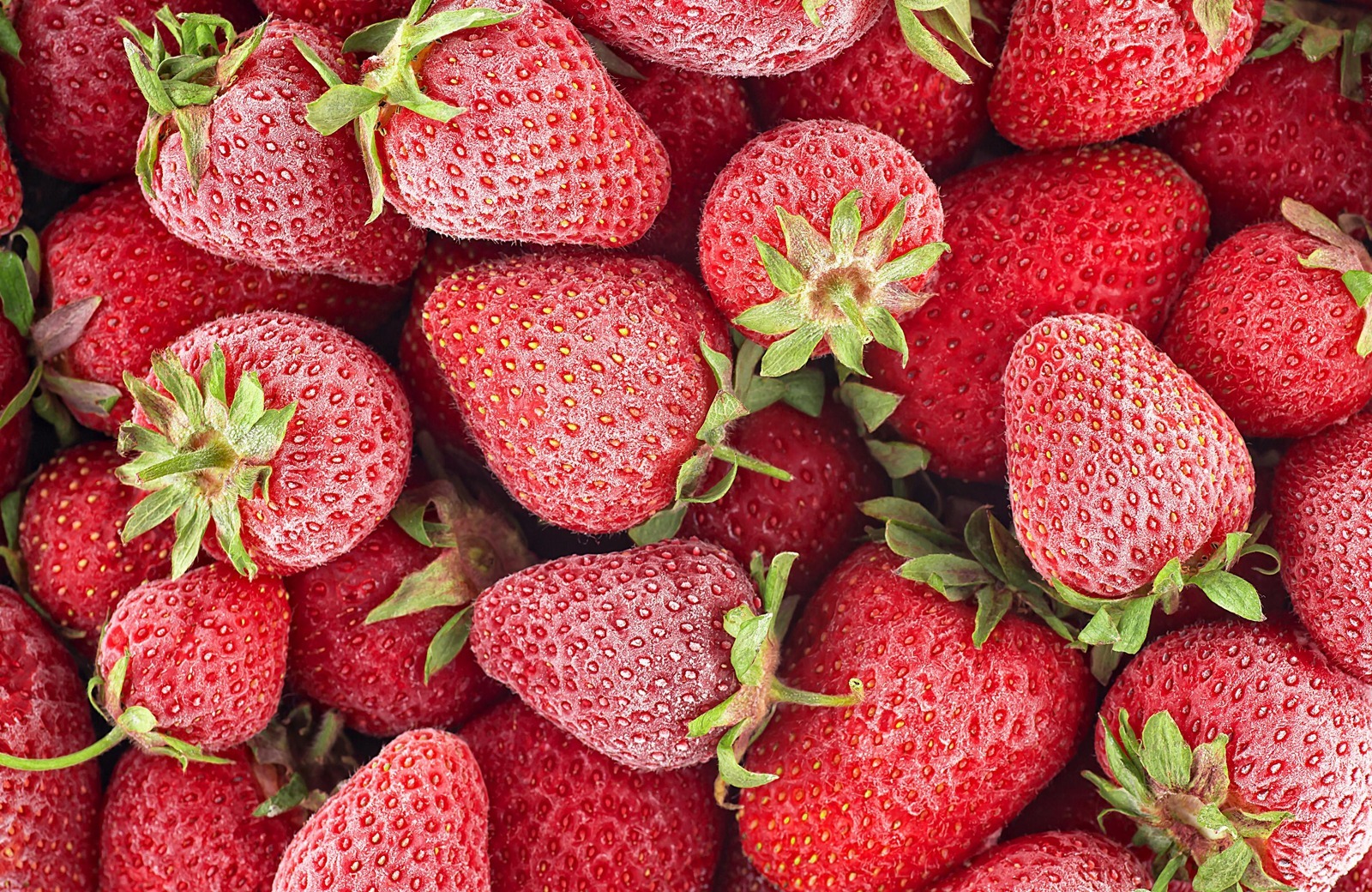
Frozen strawberries remain one of the most in-demand IQF products globally, used across retail, foodservice, bakery, dairy, and beverage manufacturing.
What to look for: The variety matters more than most buyers realize. Festival and Fortuna are two of the most sought-after strawberry varieties for IQF processing, prized for their color intensity, high Brix (sugar) levels, and consistent size. A supplier who can speak specifically about variety, Brix levels, and harvest timing is signaling a higher level of quality control than one who simply says “frozen strawberries.”
Formats to expect: Whole, sliced, and diced, both calibrated (sized and sorted) and uncalibrated (for processing and manufacturing use).
Sourcing considerations: Strawberry season timing varies significantly by growing region. Egypt’s strawberry season, for example, typically runs from January through April, making it one of the most reliable sources for early-year bulk programs. Suppliers like Mima Foods process strawberries within hours of harvest at their IQF facility in Sadat City, which is critical — the shorter the gap between harvest and freezing, the better the retained texture and nutritional value.
Best for: Retail packs, smoothie and beverage manufacturing, bakery fillings, private label dessert lines, and foodservice.
2. IQF Frozen Green Beans
Green beans are a staple in bulk frozen vegetable programs because of their versatility across retail, foodservice, and food manufacturing applications.
What to look for: Cut consistency is the differentiator here. Whole, cut, or diced green beans each serve different end uses — whole beans for retail side-dish packs, cut beans for ready meals, and diced for soups and mixed vegetable blends. A supplier offering all three formats gives you flexibility to serve multiple customer segments from one sourcing relationship.
Formats to expect: Whole and cut typically available in bulk cartons for foodservice and industrial use, or smaller retail-ready packs for private label.
Sourcing considerations: Green bean harvest windows are relatively short, which means timing your bulk orders around the supplier’s production calendar is important. Suppliers who can confirm exact production windows, rather than vague “year-round availability” claims, tend to be more transparent about how their supply chain actually works.
Best for: Foodservice bulk packs, ready meal manufacturing, mixed vegetable blends, retail side dishes.
3. IQF Frozen Broccoli
Broccoli is one of the most consistently demanded frozen vegetables worldwide, driven by its popularity in both retail and foodservice across virtually every market.
What to look for: Floret size consistency and color retention are the two biggest quality indicators. Broccoli that has been frozen too long after harvest, or frozen too slowly, tends to lose its vibrant green color and can develop a duller, more yellowed appearance — a visual cue that buyers and end consumers notice immediately.
Formats to expect: Florets in various size grades, as well as cuts suited for soups, stir-fry mixes, and ready meals.
Sourcing considerations: Broccoli season in Egypt typically runs from October through February, making it a strong complementary product for buyers who are also sourcing summer-season items like strawberries or mangoes — allowing for a more balanced year-round procurement calendar from a single supplier.
Best for: Retail frozen vegetable packs, foodservice side dishes, ready meal components, mixed vegetable blends.
4. IQF Frozen Carrots
Carrots are a foundational ingredient across an enormous range of food categories, from soups and stews to baby food, juices, and mixed vegetable blends, which makes them one of the highest-volume IQF products in global trade.
What to look for: Dice size precision matters enormously for manufacturers using carrots as an ingredient (rather than a standalone product), since inconsistent dice sizes can affect cooking times and product consistency in industrial recipes. For retail-facing products, color and uniformity of cut are the visible quality markers.
Formats to expect: Diced and sliced, with diced being the most common for food manufacturing applications.
Sourcing considerations: Because carrots are used so widely as an ingredient rather than a finished product, buyers should pay close attention to a supplier’s calibration capabilities, the ability to produce consistent dice sizes at scale is a strong signal of process maturity.
Best for: Soup and sauce manufacturing, baby food, mixed vegetable blends, retail packs, juice and smoothie production.
5. IQF Frozen Okra
Variety: Extra, Zero, Mumtaz, and One
Okra holds a unique position in the IQF frozen category, it’s a staple in Middle Eastern, South Asian, and African cuisines, and demand has been steadily growing in Western markets as global food culture diversifies.
What to look for: Okra has one of the narrowest harvest windows of any commonly frozen vegetable, typically just a few days at peak quality. This makes timing and processing speed especially critical.
Formats to expect: Whole and cut, whole okra for traditional preparations, cut okra for soups and stews.
Sourcing considerations: Egypt is one of the world’s most significant okra growing regions, with a season that typically runs from June through September. Given the narrow harvest window, buyers planning okra programs should establish sourcing relationships well ahead of season to secure volume.
Best for: Ethnic food retail, foodservice for Middle Eastern and South Asian cuisine, ready meal manufacturing, export to diaspora-focused retail chains.
6. IQF Frozen Peas
Peas are one of the most universally recognized frozen vegetables, with consistent demand across virtually every global market and food category.
What to look for: Sweetness and tenderness are the primary quality markers, both of which are directly tied to harvest timing. Peas harvested even slightly past their optimal window become starchier and less sweet — a difference that’s noticeable in the final product, especially for retail packs where peas are often the star ingredient rather than a background component.
Formats to expect: Whole peas, typically sold by size grade, with smaller peas (often called “petits pois”) commanding premium positioning in retail.
Sourcing considerations: Pea season generally falls in the spring months across Mediterranean growing regions, offering a useful complement to summer and winter-season products in a diversified sourcing calendar.
Best for: Retail frozen vegetable packs, mixed vegetable blends, baby food, premium private label ranges.
7. IQF Frozen Mango
Variety: Zebdeya, Keitt
Mango has become one of the fastest-growing categories in IQF frozen fruit, driven by demand from smoothie and juice manufacturers, dessert producers, and the growing global appetite for tropical flavors in retail.
What to look for: Brix levels (sugar content) and dice consistency are the key indicators. Mango that’s frozen before reaching optimal ripeness will lack the sweetness and aroma that makes the fruit desirable — which is why suppliers who measure and communicate Brix readings at the point of freezing are offering a meaningful quality signal.
Formats to expect: Diced, primarily — though some suppliers also offer purée-ready cuts for beverage manufacturing.
Sourcing considerations: Mango season in Egypt typically runs from June through August, positioning it as a strong mid-year addition to a sourcing calendar that might otherwise focus on spring and winter vegetables.
Best for: Smoothie and juice manufacturing, dessert and bakery applications, retail frozen fruit packs, food service breakfast and beverage programs.
8. IQF Frozen Cauliflower
Cauliflower has seen a surge in demand over the past several years, driven significantly by the rise of low-carbohydrate and plant-forward eating trends, where cauliflower is used as a substitute for rice, flour, and other traditional ingredients.
What to look for: As with broccoli, floret size and color retention are the primary visual quality indicators. Buyers sourcing cauliflower for “rice” or “mash” applications should also ask suppliers about specific cut sizes available for these processed formats, as standard floret cuts may not be suitable.
Formats to expect: Florets in various grades, with some suppliers offering specialized cuts for cauliflower rice and similar processed applications.
Sourcing considerations: Cauliflower season often overlaps with broccoli season (October through February in many Mediterranean growing regions), making it efficient for buyers to source both from the same supplier within the same production window.
Best for: Retail frozen vegetable packs, low-carb and health-focused product lines, foodservice side dishes, ready meal components.
9. IQF Frozen Artichoke
Artichoke occupies a more specialized niche in the IQF frozen category, but demand remains steady, particularly in European markets, Mediterranean cuisine applications, and premium foodservice segments.
What to look for: Artichoke hearts and bottoms require careful trimming and preparation before freezing, and the quality of this preparation work is often the difference between a product that looks premium on a plate and one that looks rough or inconsistent. Suppliers with experience in artichoke processing will typically be able to speak in detail about their trimming and preparation process — a level of specificity that’s harder to fake than general quality claims.
Formats to expect: Hearts, quarters, and bottoms, typically sold by size grade.
Sourcing considerations: Artichoke season in Egypt generally runs from February through May, making it a useful spring-season addition for buyers serving Mediterranean and European-focused foodservice or retail programs.
Best for: Premium foodservice, Mediterranean and Italian cuisine retail lines, deli and antipasto product ranges.
10. IQF Frozen Mixed Vegetables
Mixed vegetable blends are a category unto themselves, combining several of the products above (commonly carrots, peas, green beans, and corn, among others) into ready-to-use formats for retail and foodservice.
What to look for: The quality of a mixed vegetable blend is only as good as its weakest component. This means buyers should evaluate a supplier’s capabilities across each individual vegetable in the blend, not just the finished product. A supplier who produces all components of the blend in-house — rather than sourcing some components from third parties — typically offers better consistency and traceability.
Formats to expect: Standard blends (carrots, peas, green beans, corn) as well as customizable blends for private label programs.
Sourcing considerations: Because mixed vegetable blends combine products with different seasons, suppliers need year-round production capacity and storage to maintain consistent blend availability — making cold storage capacity a relevant question to ask when evaluating suppliers for this category.
Best for: Retail frozen vegetable packs, foodservice, ready meal manufacturing, private label programs.
How to Evaluate a Bulk IQF Supplier: A Quick Checklist
Across all 10 products above, a few consistent themes emerge in terms of what separates a reliable bulk supplier from one that simply meets minimum requirements:
Harvest-to-freeze timing. The best suppliers can tell you specifically how quickly product moves from harvest to IQF processing — often within hours. This single factor affects color, texture, nutritional retention, and shelf life more than almost anything else.
Format flexibility. Whether you need whole, sliced, diced, calibrated, or uncalibrated product, a supplier offering multiple formats across their range signals production maturity and gives you flexibility as your business needs evolve.
Certifications. BRCGS, FSSC 22000, GLOBALG.A.P, Kosher, and ISO certifications aren’t just compliance checkboxes, they represent ongoing audited processes across the entire supply chain, from farm to factory to shipment.
Seasonal transparency. Suppliers who can speak specifically about harvest windows — rather than claiming “year-round availability” for everything, are typically more reliable partners for planning purposes, because they understand and communicate the real constraints of agricultural production.
Storage and production capacity. For buyers planning bulk programs, a supplier’s cold storage capacity and daily production volume directly affect how much flexibility you have in order timing and volume.
Private label capability. If you’re building or expanding a private label range, a supplier’s experience with custom packaging, specifications, and formats is often more important than their standard product range.
Sourcing IQF Frozen Fruits & Vegetables from Egypt
Egypt has become one of the most significant sourcing regions for IQF frozen fruits and vegetables globally, due to a combination of favorable growing conditions across multiple seasons, proximity to European, Middle Eastern, and African markets, and a growing base of certified IQF processing facilities.
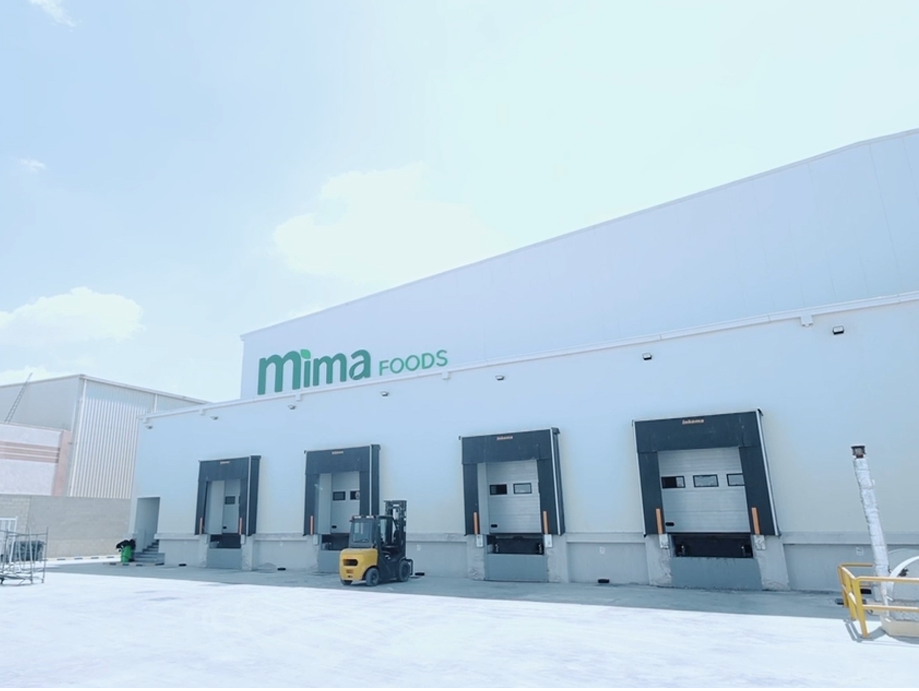
Mima Foods, based in Sadat City, Egypt, produces and exports IQF frozen strawberries, green beans, broccoli, carrots, okra, peas, mango, cauliflower, artichoke, and mixed vegetables, covering 10 product seasons across the calendar year, with a 26,000-ton annual processing capacity and certifications including BRCGS, FSSC 22000, GLOBALG.A.P, Kosher, ISO 9001, ISO 14001, and ISO 45001.
For distributors, food manufacturers, and private label buyers planning their 2026 sourcing calendar, working with a supplier that covers multiple product seasons under one quality system can simplify procurement significantly — reducing the number of supplier relationships needed to maintain a diversified frozen product range.
Looking to discuss bulk supply, private label programs, or seasonal availability? Get in touch with Mima Foods export team to talk through your sourcing requirements.

